Peptides and Body Composition: What People Are Asking
A responsible look at why peptides are part of the body composition conversation — and why training, nutrition, recovery, and consistency still matter most.
Body composition is one of the most common goals in fitness and wellness. Many people are not only focused on the number on the scale. They want to feel stronger, look leaner, improve muscle tone, support healthy weight management, and feel more confident in their own body.
As interest in modern wellness support grows, peptides have become part of the conversation. People are asking whether peptides may play a role in body composition, recovery, weight management support, and overall fitness progress.
At EGB Fitness & Body, we believe those questions deserve thoughtful answers. Peptides may be part of a science-informed wellness conversation, but they should never be treated as magic, guaranteed, or a replacement for lifestyle.
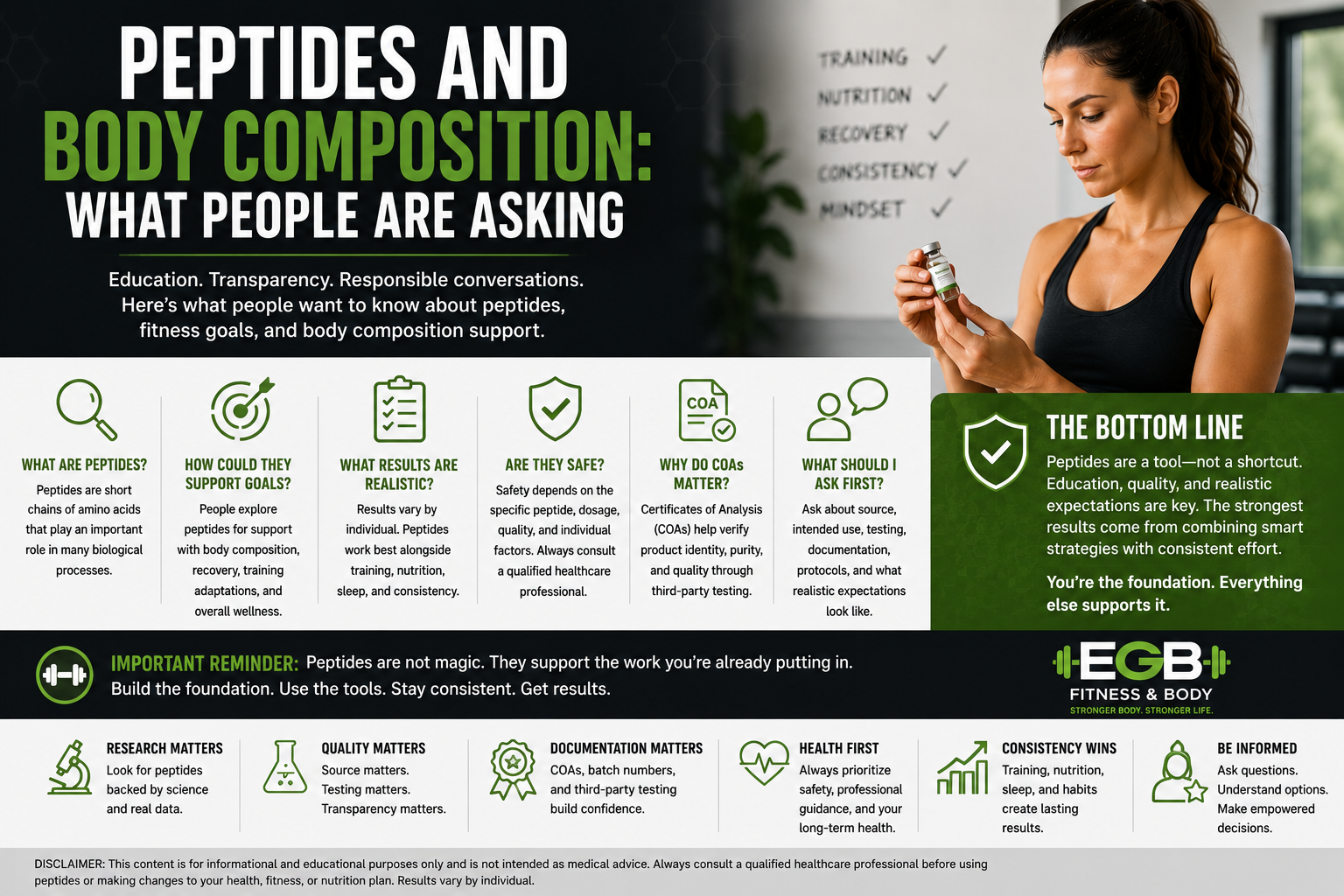
Peptides and body composition should be discussed with education, transparency, realistic expectations, and a strong lifestyle foundation.
Body composition is not just about weight. It is about muscle, fat, habits, recovery, and consistency working together.
What Does Body Composition Mean?
Body composition refers to what the body is made of. Instead of focusing only on total body weight, body composition looks at the relationship between lean mass, fat mass, water, bone, and other tissues.
Two people can weigh the same but look and feel very different depending on their body composition. That is why many fitness goals go beyond the scale.
Common body composition goals include:
- Reducing body fat
- Building or maintaining lean muscle
- Improving muscle tone
- Supporting weight management goals
- Improving strength and conditioning
- Feeling more confident and capable
These goals usually require a complete strategy, not one single solution.
Why Peptides Are Part of the Conversation
Peptides are short chains of amino acids that may play signaling roles in biological systems. Because peptides are involved in many research and wellness discussions, they have become a topic of interest among people focused on fitness, recovery, and body composition.
People are asking about peptides because they are interested in more targeted support options. The conversation often centers around recovery, metabolism, muscle support, appetite-related discussions, energy, and long-term consistency.
However, it is important to keep the conversation responsible. Not all peptides are the same. Not all products are intended for the same use. Results vary, and professional guidance matters.
Peptides may be part of the body composition conversation, but body composition progress still depends on training, nutrition, recovery, sleep, and consistency.
Question 1: Can Peptides Replace Diet and Exercise?
No. Peptides should not be viewed as a replacement for diet, exercise, or healthy daily habits.
Body composition changes require the body to receive the right signals. Strength training helps support lean muscle. Nutrition helps support energy, recovery, and weight management. Sleep and recovery help the body adapt. Consistency keeps the process moving.
A responsible pro-peptide mindset does not remove those basics. It reinforces the need to build a strong foundation first.
Question 2: Why Do People Connect Peptides With Weight Management?
Weight management is one of the reasons peptides are frequently discussed online. Some peptide-related therapies and research areas have drawn attention because of their relationship to appetite, metabolism, body weight, and body composition conversations.
That does not mean every peptide is the same, and it does not mean all peptide-related products are appropriate for every person or intended for the same purpose.
The responsible approach is to separate hype from education. Body composition support should be discussed with realistic expectations and, when appropriate, qualified professional guidance.
Wellness-support products should not be promoted as guaranteed weight-loss solutions. Body composition goals require a broader lifestyle strategy.
Question 3: What Role Does Muscle Play in Body Composition?
Lean muscle is an important part of body composition. Building or maintaining muscle can influence strength, appearance, confidence, daily function, and overall fitness progress.
This is why strength training matters so much. A body composition goal should not only focus on losing weight. It should also consider how to preserve or build lean mass while improving overall fitness.
The foundation for muscle-focused goals includes:
- Progressive strength training
- Enough protein intake
- Recovery between workouts
- Consistent sleep
- Proper hydration
- Realistic training progression
Peptides may be discussed in the larger wellness conversation, but they do not replace the need for training and recovery.
Question 4: Why Does Recovery Matter for Body Composition?
Many people think body composition changes only happen through harder workouts or stricter nutrition. But recovery is also essential.
Training creates stress. Recovery allows the body to adapt. Without enough recovery, people may experience low energy, poor performance, increased soreness, or difficulty staying consistent.
Recovery habits that support body composition goals include:
- Getting enough sleep
- Taking rest days when needed
- Managing stress
- Stretching and mobility work
- Eating enough to support training
- Staying hydrated
The more complete the recovery strategy, the more sustainable the fitness journey can become.
Training
Strength and conditioning help create the stimulus needed for physical progress.
Nutrition
Food choices help support energy, recovery, weight management, and muscle goals.
Recovery
Sleep, rest, hydration, and stress management help support consistency and adaptation.
Question 5: Are All Peptides the Same?
No. This is one of the most important things to understand.
The word “peptide” describes a broad category. Different peptides may be discussed in different contexts, including research, prescription therapies, cosmetics, fitness, or research-use-only products.
Because the category is so broad, it is important not to treat all peptides as interchangeable.
Helpful questions include:
- What type of peptide is being discussed?
- What is the intended use?
- Is it a prescription therapy, research-use-only product, cosmetic ingredient, or something else?
- Is product documentation available?
- Is a Certificate of Analysis available where applicable?
- Are claims being made responsibly?
- Should a qualified professional be consulted?
Better questions lead to better conversations.
Question 6: What Should People Be Careful About?
Because peptides are popular, they are often discussed online in ways that may be overly simple, exaggerated, or incomplete.
People should be cautious of:
- Guaranteed results
- Claims that sound too good to be true
- Promises of effortless fat loss
- Products with no documentation
- Unclear labeling
- One-size-fits-all advice
- Ignoring medical or professional guidance
A responsible approach to peptides and body composition should always include education, transparency, and realistic expectations.
Question 7: What Is the Best Foundation for Body Composition Goals?
The best foundation is a realistic lifestyle plan that can be followed consistently.
That includes:
- A training plan that fits your schedule
- Nutrition habits that support your goals
- Enough protein to support lean mass
- Hydration and recovery routines
- Sleep and stress management
- Progress tracking
- Accountability and support
Body composition progress is easier to maintain when the plan fits real life.
The best body composition plan is not the most extreme plan. It is the one you can follow consistently.
How EGB Fitness & Body Supports the Conversation
EGB Fitness & Body helps individuals work toward their fitness and wellness goals through coaching, guidance, accountability, and education.
For body composition goals, we focus on the complete picture. That means understanding your starting point, creating a realistic training strategy, supporting consistency, and helping you ask better questions about wellness-support options.
When people ask about peptides or current product information, we believe the conversation should include product transparency, available documentation, and responsible expectations.
Product details and available testing documentation, including Certificates of Analysis, may be provided upon request where applicable.
Final Thoughts
Peptides and body composition are frequently discussed together because many people are looking for more targeted, science-informed wellness support.
But peptides should not be treated as magic. Body composition progress still depends on training, nutrition, recovery, consistency, and realistic goal-setting.
The best approach is balanced. Build the foundation first. Stay educated. Ask better questions. Look for transparency. Avoid exaggerated claims. Consult qualified professionals when needed.
At EGB Fitness & Body, we believe people deserve clear information, practical support, and a plan that fits their goals. Peptides may be part of the conversation, but lifestyle and consistency still lead the way.
Have Questions About Body Composition Support?
Contact EGB Fitness & Body to learn more about training support, wellness guidance, body composition goals, and current product information available upon request.
This content is for general informational and educational purposes only. EGB Fitness & Body does not provide medical advice, diagnosis, or treatment. Peptides, supplements, wellness products, weight management products, and research-use-only products should be discussed with a qualified healthcare professional before use. Research-use-only products are not intended to diagnose, treat, cure, or prevent any disease and are not intended for human or animal consumption unless otherwise stated by the manufacturer and permitted by applicable law. Results vary by individual.